Dark Psychology · May 13, 2026 · 4 min read
The Mirror Mystery: Why You Should Never Stare at Your Own Reflection in the Dark
"The glass is not a wall, but a window.
And windows work both ways."
And windows work both ways."
You have done it before. Everyone has. You walk into the bathroom at 2:00 AM. The light switch is across the room, but you decide you don’t need it. You catch your own reflection in the dark mirror for just a second too long. And suddenly, the face looking back at you isn't yours.
Your expression seems unfamiliar. The shadows are in the wrong places. You feel a creeping certainty that if you keep staring, the reflection might move before you do. This isn't just a "scary thought"—it is a documented biological glitch. Today, we are solving The Mirror Mystery.
1. What Happens to Your Face in the Dark: The Troxler Effect
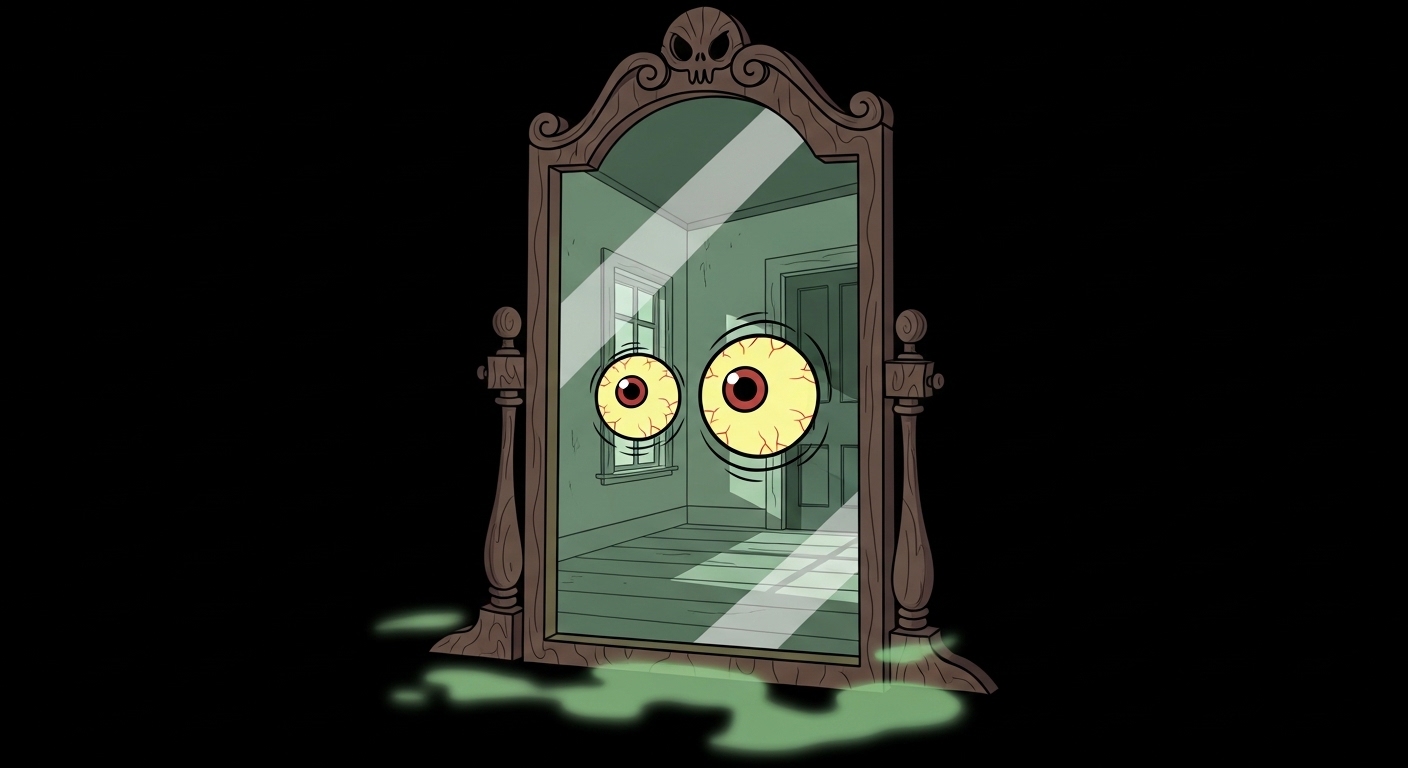
The science behind this terror is called the Troxler Effect (or neural adaptation). When you stare at a fixed point in dim light—like your own eyes in a dark mirror—your neurons literally get bored. They stop firing. Because the visual information isn't changing, your brain begins to "delete" the image to save energy.
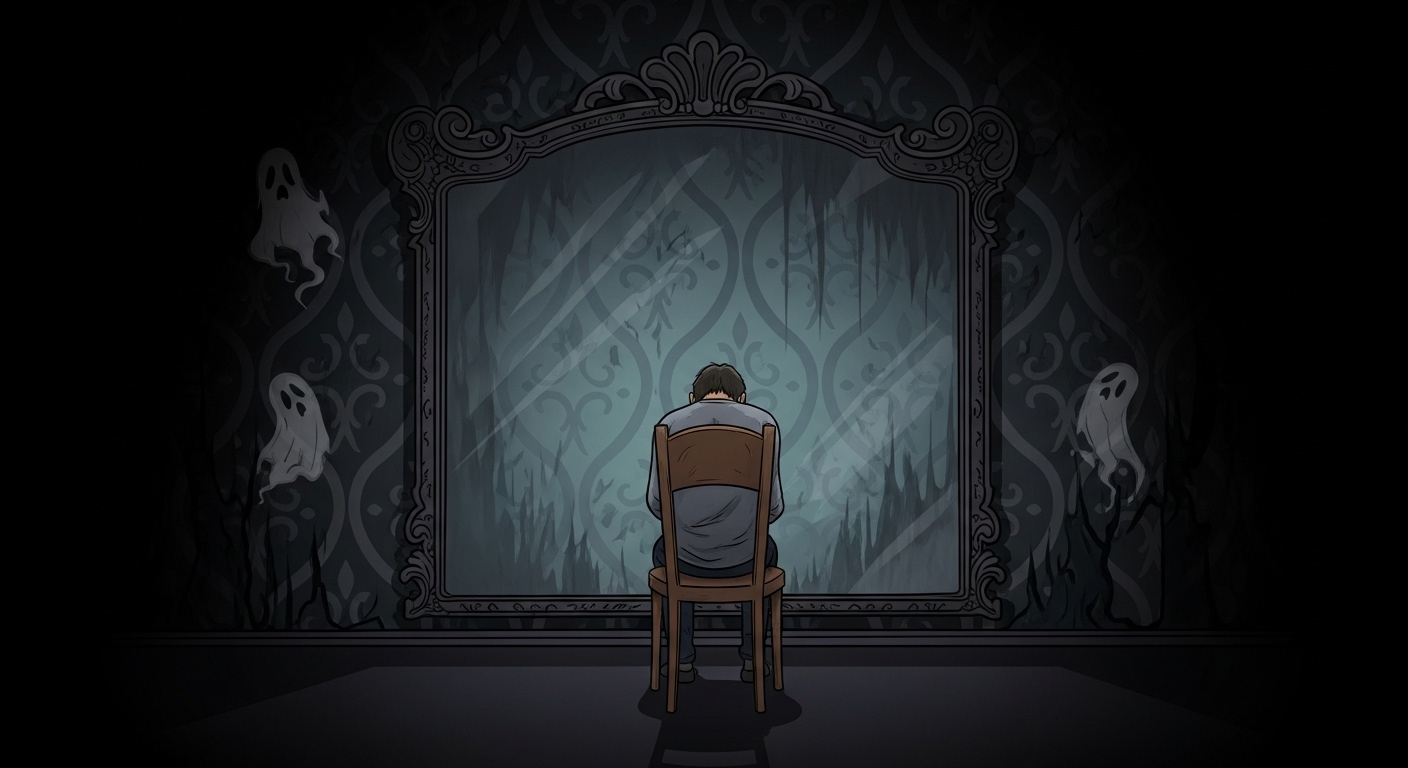
But your face doesn't fade evenly. Your peripheral vision—the edges of your jaw, your hair, your forehead—begins to warp and shift. Your brain is an engine of pattern recognition; it hates "nothingness." So, it starts manufacturing movement to fill the gaps. This is why your eyes might seem to drift or your smile might seem to curl even when your face is still. It’s the same uncomfortable distortion we captured in our Cracked Reflection artwork.
2. The 10-Minute Monster Experiment
In 2010, psychologist Giovanni Caputo proved that you can make anyone hallucinate using only a mirror and a timer. He had healthy participants sit in a dimly lit room and stare at themselves for ten minutes. The results were disturbing:
| Time Elapsed | Reported Visuals |
|---|---|
| 1 Minute | Nothing unusual. |
| 3 Minutes | Features begin to soften and "melt." |
| 5 Minutes | Appearance of superimposed faces (parents or strangers). |
| 10 Minutes | "Grotesque monsters" and "unknown beings" replacing their own face. |
This "Strange Face" illusion happens because your brain is starved for detail. In the vacuum of a dark room, it pulls from your Deep Subconscious—memories of faces you’ve seen, fears you've harbored, or characters from horror movies. If you feel like you're being watched while reading this, you’re experiencing the same "Cognitive Priming" found in our Raven Watcher collection.
3. Why Dark Bathrooms Are Hallucination Factories
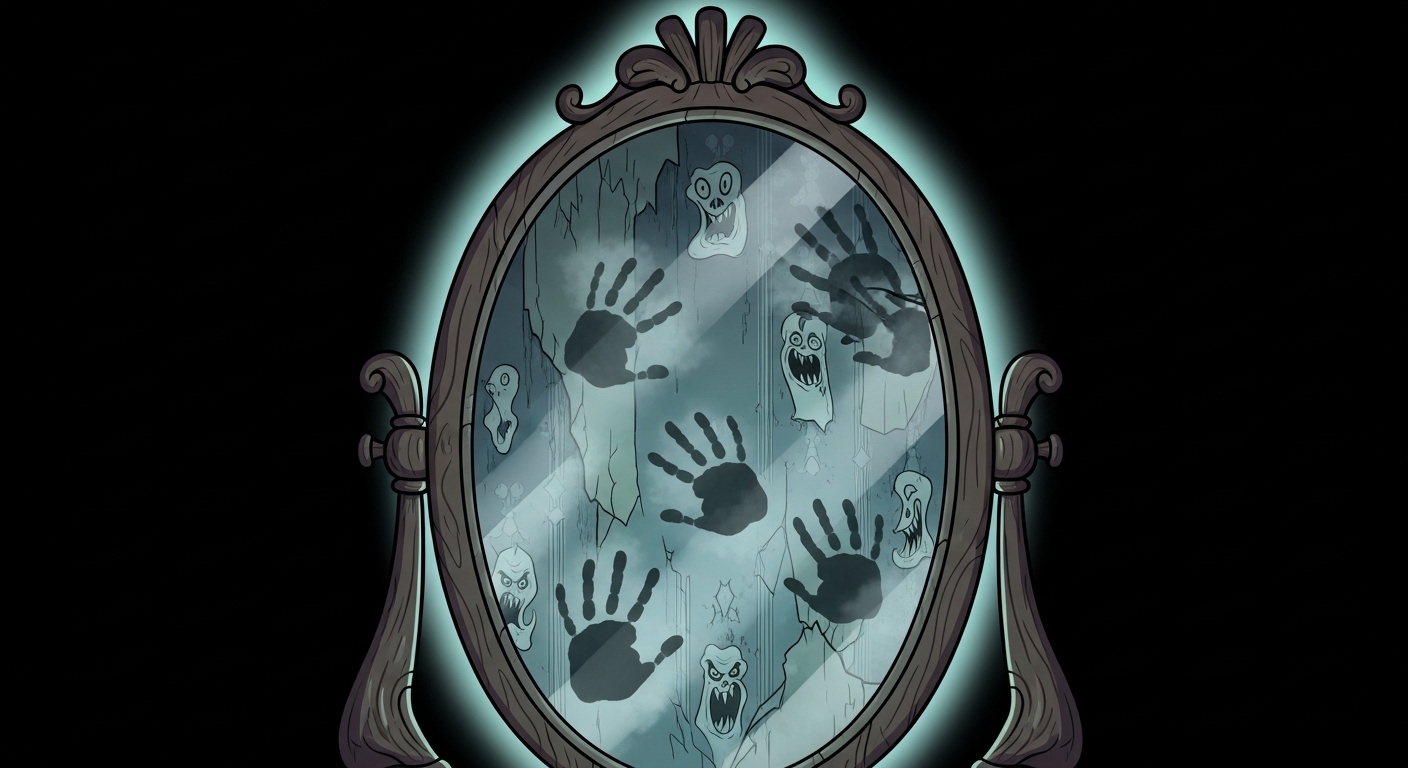
Why is this worse in a bathroom at 2 AM than in a bright living room? Bright light gives your brain too much data to ignore. Dark light gives your brain just enough to recognize a shape, but not enough to stabilize it. In the gap between "seeing" and "not seeing," your brain panics and fills the void with:
- Primal Fear Responses: Your brain "autofills" sharp teeth, wide eyes, or claws.
- False Animation: Slight movements of your own body or flickering shadows make the reflection look like it has its own will.
- Mirror Trauma: Childhood stories of "Bloody Mary" or the Mina Doll hauntings create a mental filter that colors what you see.
4. Folklore vs. Reality: The Universal Warning
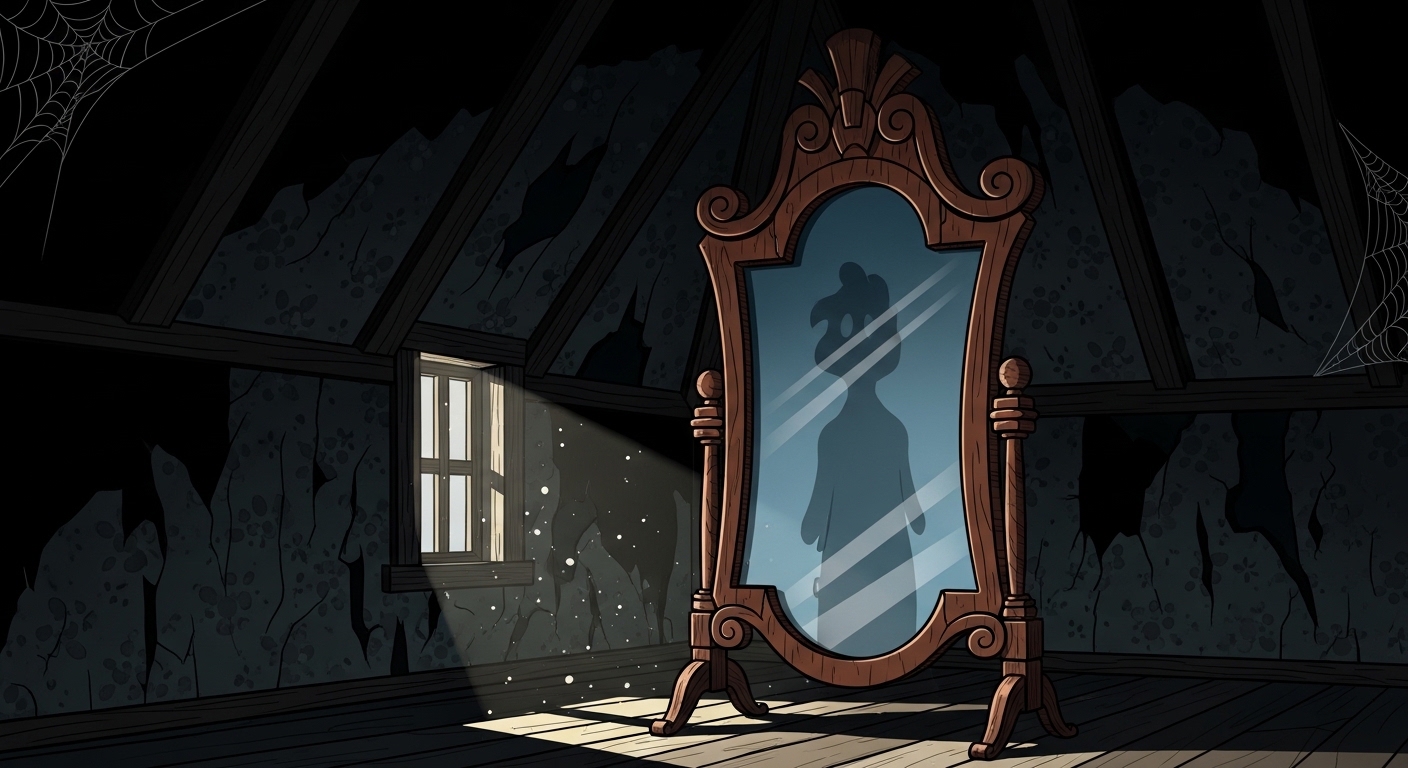
Every culture on Earth has a warning about mirrors in the dark. Ancient people didn't have the "Troxler Effect" written in a textbook, but they had thousands of years of terrified observations. They knew that if you stare at yourself in the dark, something bad happens.
Global Mirror Warnings:
- Japanese: Mirrors are considered "Soul Traps" and should be covered at night so spirits don't enter our world.
- Mexican: A child who stares too long at their reflection will see a monster replace their soul.
- Korean: Mirrors in dark, quiet rooms are seen as portals for wandering ghosts—much like the entity in our Spectral Hand series.
5. Why You Should Actually Never Do This
It isn't just about being scared. Staring into a dark mirror can trigger Depersonalization. When you trick your brain into seeing your own face as a stranger, you can cause a dissociative episode. You might feel detached from your body, or like your face belongs to someone else. This "Brain Betrayal" can be genuinely traumatizing for people with anxiety or a history of sleep disorders.
The Rule: If you ever catch your reflection in a dark room and something feels wrong—look away immediately. Do not test it. Do not see "how long you can last."
Summary: The Mirror Mystery Solved
- Why does my face warp? Neuron fatigue (Troxler Effect) makes your brain "delete" and "autofill" your features.
- Is it a ghost? No, it’s a biological glitch in your optical processing system.
- How to stop it? Turn on a light or look away. New visual data resets the neurons instantly.
- Where can I see more? If you enjoy the thrill of the uncanny, explore our Broken Mask collection.
Curator's Note: This article is for educational and entertainment purposes. If you are a fan of high-contrast, atmospheric art that explores these themes, consider securing a free 4K download of the Shadow Thief or the Midnight Ghoul to make your own device a piece of the mystery.